Thursday, March 17, 2011

Big Picture: Does the Market have Legs?
By Grant de Graf
WSJ reports:
"Factory operators doing business in the Philadelphia Fed’s district saw already-strong growth heat up further in March to the best pace in nearly three decades, as inflation pressures remained persistent.
"The Federal Reserve Bank of Philadelphia reported Thursday that its index of general business activity for manufacturers moved up to 43.4, the best reading since January 1984, from 35.9 the month before. Economists had been expecting a modest slowing in the rate of expansion, and had predicted the index would come in at a still very respectable 30.0. Readings over zero indicate expansion and describe the breadth of the change, not its magnitude."
Given the market's automatic adjustment mechanism in reconciling expectations with actual performance, the strong growth reading suggests that the market is scheduled for further appreciation this year, providing that the world can manage or come to terms with geopolitical and catastrophic risk. It's always difficult to call a bottom, but in the long term seemingly, there is still evidence of some reasonable upward momentum
Perspective: Yen Volatility
By Grant de Graf
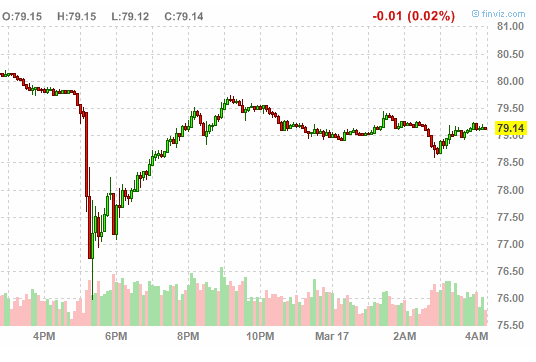
Yesterday at about 5pm EST the Yen made a major correction of over 5%. Guess what? Within about four hours that spike had been literally wiped out and gains were quickly parred. Reports suggested that because of the huge amount of foreign Japanese assets that would need to be liquidated to repatriate funds and pay for rebuilding, the USD/JPY was being hammered. After the Japanese government issued a statement that no foreign assets were being disposed, the market quickly corrected itself.
Wednesday, March 16, 2011
Economist Eichengreen Sees Yuan As Dominant Global Currency
Economist Eichengreen Sees Yuan As Dominant Global Currency
David Wessel, Economics Editor for the Wall Street Journal, sits down with Barry Eichengreen, an economics professor at the University of California Berkley, to discuss how the yuan could be widely used within ten years.
Perspective: When is a Black Swan a Grey Swan?
By Grant de Graf
The Black Swan Theory or Theory of Black Swan Events is a metaphor that encapsulates the concept that the event is a surprise (to the observer) and has a major impact. After the fact, the event is rationalized by hindsight.
The theory was developed by Nassim Nicholas Taleb to explain:
1] The disproportionate role of high-impact, hard to predict, and rare events that are beyond the realm of normal expectations in history, science, finance and technology
2] The non-computability of the probability of the consequential rare events using scientific methods (owing to the very nature of small probabilities)
3] The psychological biases that make people individually and collectively blind to uncertainty and unaware of the massive role of the rare event in historical affairs
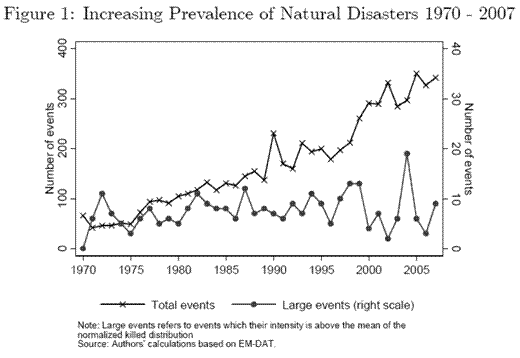
In recent years, natural disasters are occurring at a much more rapid rate and have moved beyond the boundaries of their normal levels of distributions. Events such as the earthquake in Christ Church, in Haiti and New Zealand, the Middle East crisis and the earthquake in Japan, are happening at unprecedented rates. Clearly, events that may have previously been termed as "black swan" need to be viewed in a different light, and reclassified as grey swan.
UK unemployment rate rises to 8% | Finance Markets
UK unemployment rate rises to 8% | Finance Markets: "UK unemployment rate rises to 8%"
Subscribe to:
Posts (Atom)